
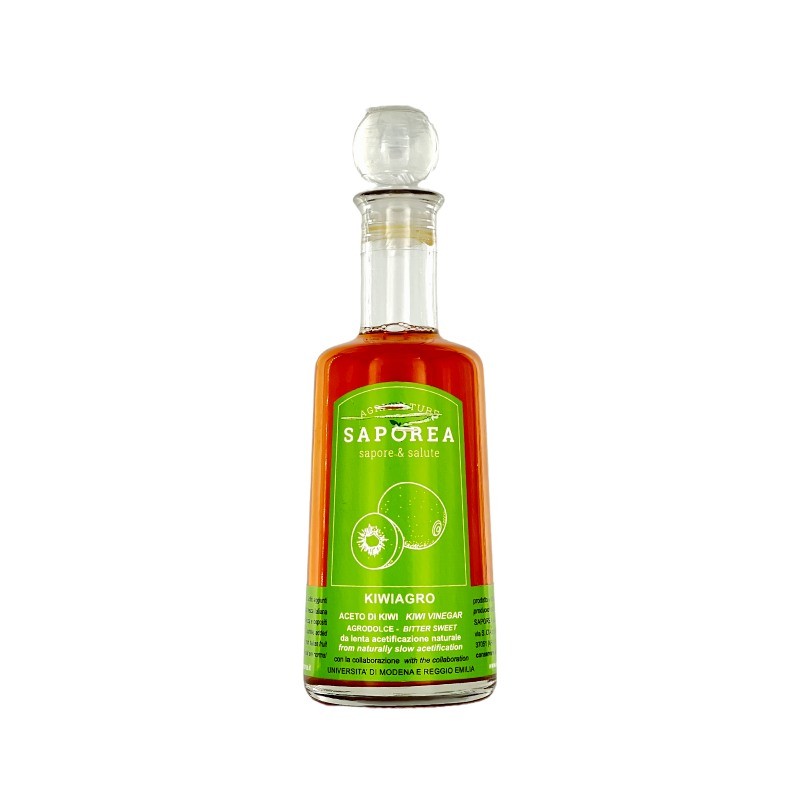
Kiwi vinegar of the Hayward variety, obtained by the slow spontaneous acetification method. It is neither pasteurised nor microfiltered and contains no sulphites.
Kiwi vinegar
The name Kiwi has a precise date of birth: 1958, in New Zealand. A short, easy-to-remember name derived from the nation's national bird. No one will ever call him Yang Tao again, the original name of the country where he was born, China.
Kiwi vinegar is a versatile ingredient that can add a tropical touch to your favourite sauces. If you are looking for creative ways to use this vinegar, try making an exotic sauce with a base of kiwi vinegar, fresh chilli, garlic and a pinch of brown sugar. This spicy sauce is perfect with grilled chicken or fish, adding a unique and surprising flavour. Or try a sauce made with kiwi vinegar, honey and mustard to accompany a salad of spinach, walnuts and goat's cheese. This combination of flavours creates the perfect balance of sweetness and acidity, making every bite fresh and delicious. Experiment with kiwi vinegar in your sauces and be surprised by the endless possibilities this ingredient can bring to your kitchen.
Kiwi vinegar belongs to the large family of fruit vinegars. Contrary to popular belief, vinegars made from fruit or many other foods have been known since ancient times and are very important in the kitchen for preserving food. The most popular, apple vinegar, was widely used in Mesopotamia as early as 5000 BC.
Fruit vinegar is produced by the action of gram-negative bacteria which, in the presence of air and water, oxidise the ethanol in the fruit, converting it to acetic acid.
There are many recipes for homemade fruit vinegar on the web, but making a good fruit vinegar takes time, patience, experience and expertise; it is not enough to macerate the fruit, add wine vinegar and filter.
In the case of slow spontaneous fruit vinegar production, the transformation of the raw material into vinegar takes 12-18-24 months.
Kiwi vinegar